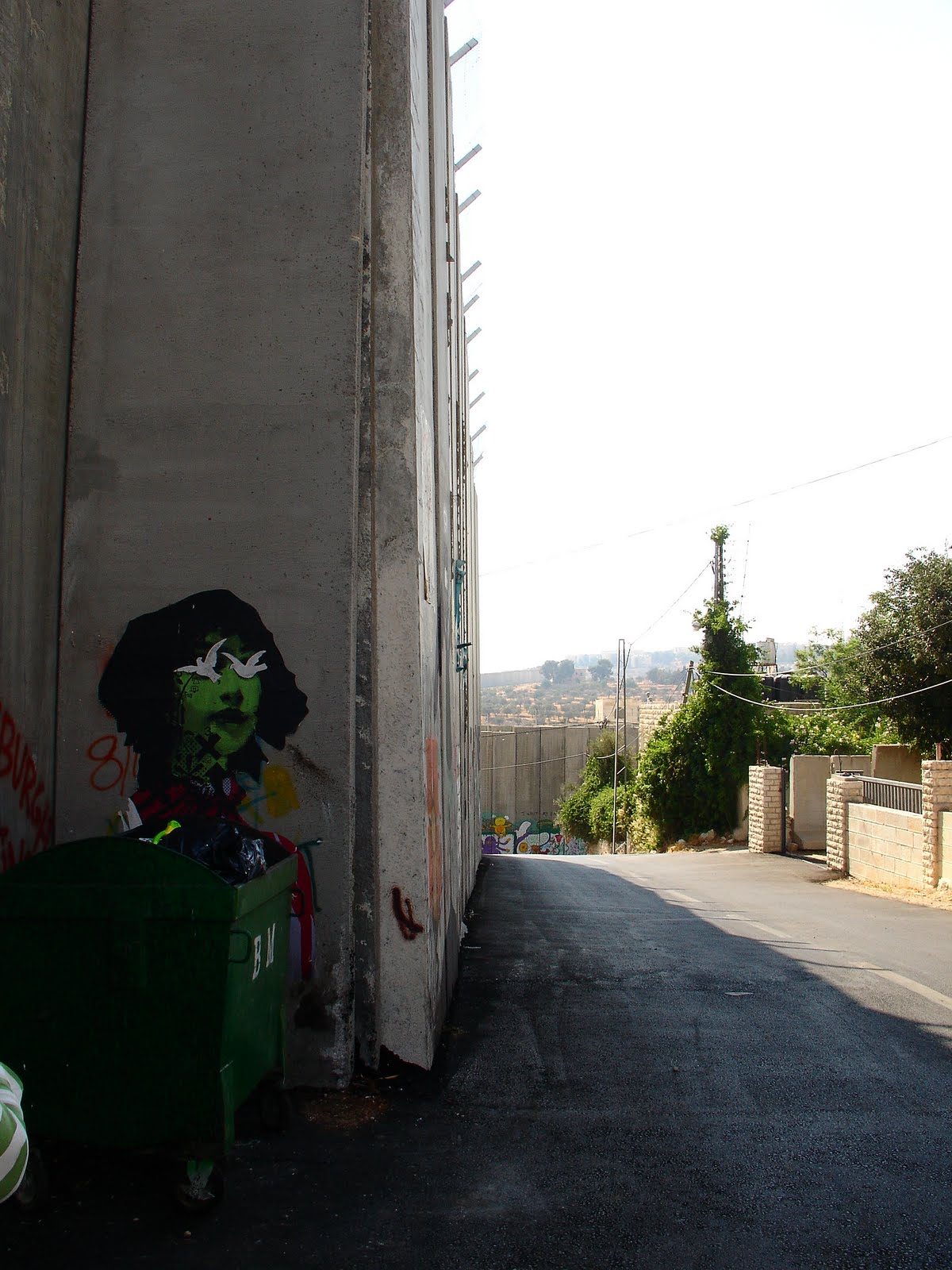
The main streets of Ramallah centre are normally quite lively. Today the usual chaos of pedestrians and street traders mingling through the heavy morning traffic reached a so far unforeseen level as clusters of young people were filling up every free space in the streets. When I reached the office it was clear to me that something was going on.
torsdag den 22. juli 2010
A morning full of excitement
The main streets of Ramallah centre are normally quite lively. Today the usual chaos of pedestrians and street traders mingling through the heavy morning traffic reached a so far unforeseen level as clusters of young people were filling up every free space in the streets. When I reached the office it was clear to me that something was going on.
A beautiful evening


On my stroll back to home, the strong scent of jasmine flowers worked as magic dust in the cool air. You hardly notice these flowers during the day, but at night they send out their wonderful smell and you realise that they are everywhere.
To fulfil a perfect evening, I stayed up late and watched a few films with my roommate. When the early hours of the morning had finally made the street silent, it was time to go to sleep.
søndag den 18. juli 2010
A few facts about the wall
Behind the Wall
Another story. During the same trip – but a week or so later – I had to catch a public bus in Jerusalem along with the others from the travel group. In a split second the images of busse blwon apart ran through my head. I got nervous, wondering if the ride would be safe. Very quickly I assured myself that there was nothing to worry about – because the wall was there to keep possible attacks away.
These two feelings, both very strong, provide a good example of the complexity of the situation here. It is so important to be nuanced and I do not believe that you are truly able to decide what you think is right and wrong if you do not listen to all the contrasting feelings inside you.
Probably any person in the world can imagine the horror of a bomb attack. It is much harder to imagine what restrictions in your freedom of movement feel like.
On the one hand, the wall and its checkpoints has hardly affected me during my stay here this summer. On the other hand, its presence penetrates so many aspects of daily life. Many of my colleagues live in Jerusalem or other places outside Ramallah. They never know how long it will take them to get home. Jerusalem is only about 20 km from Ramallah, but on a bad day it can take hours getting there. Checkpoint queues.
I have been in Ramallah for more than two weeks now, but I still haven't made it to Bethlehem to see any of my friends from the last trip. Bethlehem, just like Jerusalem, is only about 20 kms away from Ramallah, but the bus ride will take about 1 ½ hours. Work ends at 5 p.m. and it is not impossible to go to Bethlehem and back in the same evening. But the idea of having to spend as much time in a bus as with my friends has kept me from going. Just the thought of all the hazzle and the extra waiting that is very likely to occur simply wears me out. I only experience the restriction in freedom of movement on a tourist level. Many Palestinians have lost their jobs due to this restriction, if they are not born in Jerusalem they must apply for permittance to go there, and they never know how long it will take them to go from one Palestinian town to another.
fredag den 16. juli 2010
Sounds of Ramallah
Days are going by in Ramallah and I am slowly getting used to the pace of the city. I normally wake up around 5 a.m. when the first beams of sunlight make their way through the curtains in my window. There is no trafic, no music, no people in the street. The silence of these early hours is true magic.
The first person in the street is the boy who sells bread. His nasal voice cuts through the silence like a razor blade and wakes up the whole neighbourhood. Very soon, the traffic follows and adds its noise, the rythm of buzzing engines with honking horns setting the beat.
In a few days, the Palestine Festival will begin. I am looking forward to add new sounds to my experiences in Ramallah.
onsdag den 14. juli 2010
Handala. A little boy with a big message
(Handala on the wall in Dheisheh Refugee Camp in Bethlehem)
Handala is a ten-year old refugee. He does not show his face to anybody, but only lets people see him from his back. With his hands firmly clasped together on his back he refuses to accept the solution the outside worlds suggest to the solve the conflict in his country. He does not believe in these solutions. He will not face people again, and he will not grow up, until he can return to the homeland he was forced to fled so many years ago.
In 1969, the Palestinian cartoonist Naji Salim al-Ali drew Handala for the first time. Ever since he has been a symbol of resistance towards the occupation, and representing the longing for a free country he has become of a part of the Palestinian identity.
I first heard about him in 2008, when I visited Dheisheh Refugee Camp near Betlehem, one of the many refugee camps that were established from the war that followed the officiel enunciation of the state of Israel.
In the camp is a house for common activities and gatherings. The walls in the never ending stair case leading you up through the narrow, tall building were full of drawings and poems made by the refugees living in Dheisheh.One of these drawings depicted Handala.
The story about Handala is important, but it is so hard to tell. In 1987 Naji Salim al-Ali was assasinated and Handala lost his chance to show his face again, to show his eyes, his identity. The destiny of this little figure is painfully symbolic to the destiny of the Palestinian refugees whose only hope and dream is to return to the home they left when they fled the war. A home that probably no longer exists. It is the story about clinging to hope in a hopeless situation.